
INCREASED ENERGY YIELD
Higher power per square metre and less energy loss due to shading
Technology
Shingled solar cells are solar cells that are typically cut into 5 or 6 strips. These strips can be overlapped like roof tiles to form the electrical connections. The cell strips are joined using an electrically conductive adhesive (ECA), which provides conductivity and flexibility. This allows the cells to be connected differently from conventional solar panels: no busbars (ribbons) are required, and the cells can be joined without leaving any gaps between them.
Shingled solar modules can also be wired differently from conventional solar panels. Whereas the cells in conventional solar panels are typically wired in a series of strings, the cells in shingled panels can be wired in a parallel configuration.
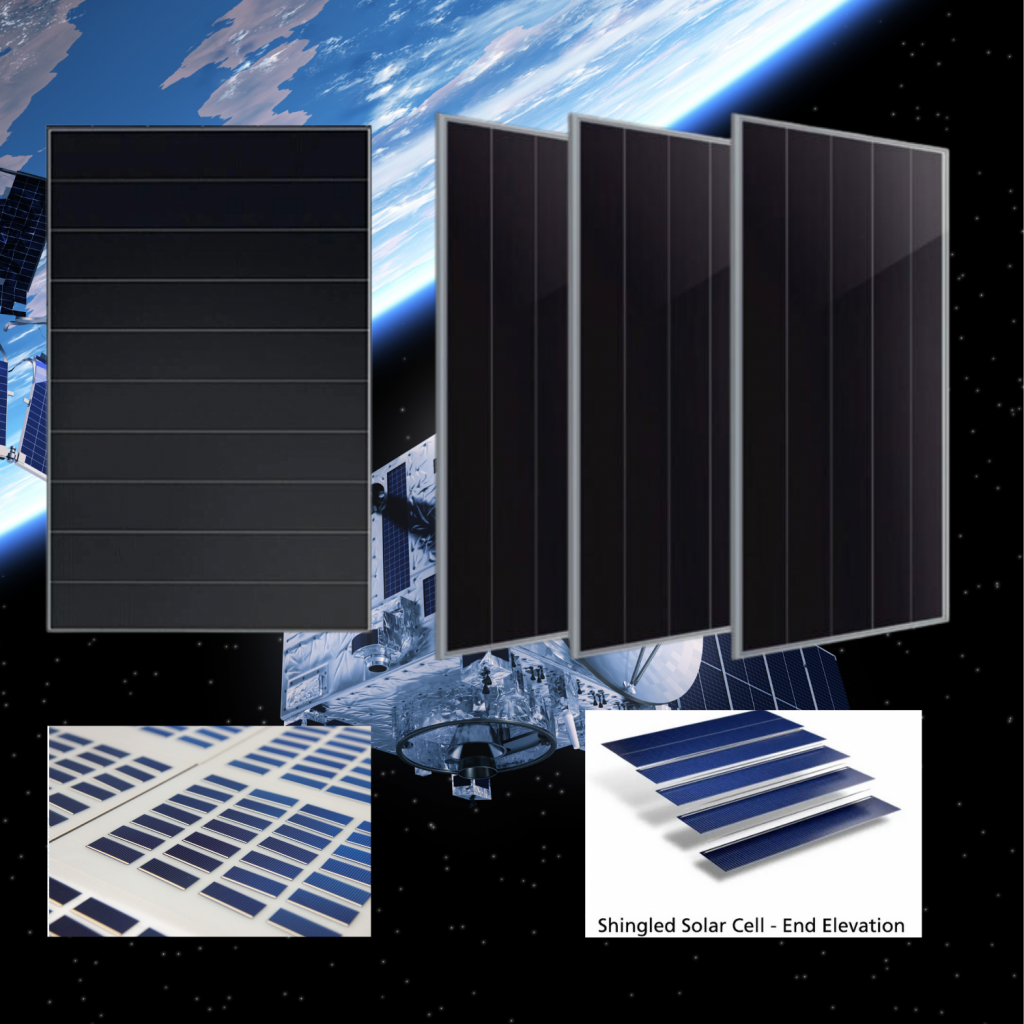
The shingled solar panel design offers three key advantages: it generates more power, improves reliability and is aesthetically pleasing.
Higher power per square metre and less energy loss due to shading
Fewer busbar failures and better mechanical performance
Advanced R&D design

Shingled solar cells do not need busbars on the top of the cells, so most of the cell surface is exposed to sunlight. The cells do not need to be spaced apart as in conventional solar panels, so the panel area can generate more energy.
Conventional solar panels have individual cells connected in series, so when part of the panel is shaded, it can have a significant effect on the power output. By arranging the cells in a shingled layout, they can be wired in groups and configured in parallel, which significantly reduces the losses caused by shading.